
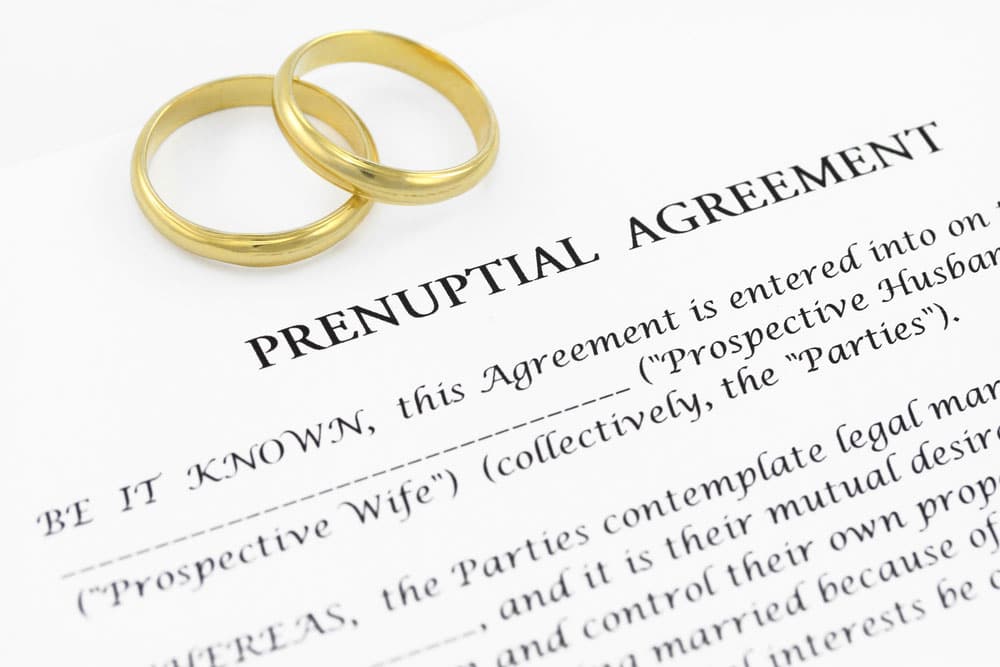
A prenup signed too close to the wedding is one of the easiest ways to make it unenforceable. Timing is one of the first things a judge examines when an agreement is challenged.
Key Takeaways:
- New Jersey courts look at whether a prenup was signed voluntarily and with full disclosure, not at a specific number of days.
- Real time before the wedding is still the best protection against a challenge.
- Legal guidance early on is what makes an agreement hold up.
You found the attorney, negotiated the terms, and signed it the week before the wedding, maybe even the night before the rehearsal dinner. A prenup signed under that kind of pressure is one of the most legally fragile documents you can produce.
New Jersey courts examining a challenged prenup start from a specific question: did the party trying to get out of the agreement prove, by clear and convincing evidence, that they signed involuntarily, or that the agreement was unconscionable because they lacked real financial disclosure or the chance to get independent legal advice.
A last-minute prenup doesn’t become invalid automatically, and the burden is actually on the person challenging it. But rushed timing hands that person one of the strongest arguments available, and in a high-asset divorce, that argument can erase protections you spent months building.
What New Jersey Law Actually Requires
Unlike some states, New Jersey doesn’t set a specific number of days that must pass before the wedding. What it requires instead is that the agreement be in writing, signed by both parties, with a statement of assets attached.
To have an agreement thrown out, the challenging spouse has to prove one of two things, by clear and convincing evidence.
Involuntary execution. They signed the agreement without a genuine choice in the matter.
Unconscionability. Before signing, they weren’t given full and fair disclosure of the other party’s finances, didn’t have adequate knowledge of those finances, or didn’t consult independent legal counsel and didn’t waive that right in writing.
That last point matters: New Jersey allows a party to waive their right to independent counsel, but only in a separate signed writing made before the agreement itself is signed. A verbal waiver, or no waiver at all, leaves the door open to a challenge.
Why Timing Still Matters, Even Without a Day-Count Rule
Timing isn’t its own legal test in New Jersey, but it’s powerful evidence for the arguments that are.
A prenup signed three days before the wedding, after the venue is paid and guests are en route, is exactly the fact pattern a challenging spouse points to when arguing the signing wasn’t truly voluntary or that there wasn’t real time to get independent advice.
The social and financial pressure at that point is enormous. Walking away from the whole wedding no longer feels like a realistic option, and that context can support an involuntariness argument even without anyone saying a word about consequences.
The Practical Framework Most Attorneys Recommend
Because timing feeds directly into the involuntariness and disclosure arguments, most family law attorneys still build in real breathing room, even without a statutory deadline.
Thirty days is treated as a reasonable floor. Below that, it becomes easier for a challenging spouse to argue there wasn’t a genuine opportunity to review the terms or consult a lawyer.
Sixty to ninety days is the practical standard for high-asset situations. With complex terms, multiple properties, or significant family wealth involved, that window allows both parties to retain independent counsel without rushing, complete real financial disclosure, and negotiate terms without the wedding as a backdrop.
Before the venue is booked is the ideal starting point. At that stage, walking away from the relationship is still a genuine option for both parties, which strengthens the voluntariness argument later if the agreement is ever challenged.
What Else Courts Look At
Beyond timing, a clean process addresses every ground New Jersey allows for a challenge:
- Full financial disclosure. Both parties need honest, complete disclosure of assets, income, and financial obligations, or a written waiver of the right to more.
- Independent legal counsel, or a written waiver of it. Each party should have their own attorney. If one party goes without, New Jersey requires a separate signed writing confirming they knowingly gave up that right.
- Voluntary execution. Courts look at whether the circumstances made a genuine choice possible, which is where rushed timing does the most damage.
- A statement of assets. New Jersey requires this be attached to the agreement itself.
The Process That Produces an Enforceable Agreement
Here’s the sequence that addresses every ground New Jersey allows for a challenge:
- Start early. Six months ahead of a high-asset wedding isn’t excessive.
- Each party retains independent counsel, or signs a separate written waiver of that right before signing the agreement.
- Full financial disclosure from both sides, attached as a statement of assets.
- Negotiate. A prenup is a negotiated agreement, not a presented one.
- Allow revision time, with at least one full review cycle before signature.
- Sign early, well before the wedding turns the timeline into a pressure point.
- Document the process, since a paper trail of correspondence and drafts supports the agreement’s voluntariness later.
When You’re Already Close to the Date
What if the wedding is six weeks out and the prenup hasn’t been started? The situation is harder, but not necessarily hopeless.
Six weeks can still work if both parties move quickly, each has counsel (or signs a proper written waiver), and the terms aren’t deeply contested. The resulting agreement carries more risk than one executed three months out, but it can still hold.
What’s much harder to defend is a process that started two weeks before the wedding with contested terms and no counsel, and no written waiver, for one party.
At that point, the honest options are postponing the wedding, or addressing the financial planning afterward through a postnuptial agreement, once the pressure is gone.
Mistakes That Make Prenups Vulnerable to a Challenge
- Presenting the agreement days before the wedding. The involuntariness argument writes itself.
- No counsel, and no written waiver. Either get each party a lawyer, or get the waiver signed and dated before the agreement itself.
- Incomplete or misleading financial disclosure. An agreement built on bad information doesn’t survive a challenge.
- Oral agreements or handshake terms. Prenups must be in writing, signed, with a statement of assets attached.
- Not updating the agreement after major life changes. A prenup written before children, a business acquisition, or a major inheritance may not speak to the relevant assets years later.
What a Well-Executed Prenup Looks Like
The agreement that actually protects you is one both parties understood, negotiated through independent counsel or a proper written waiver, and signed freely with time to spare before the wedding became a pressure point.
That’s the prenup that holds up in New Jersey courts. Not because it hit some specific day count, but because the process that produced it leaves the challenging spouse with no real argument to make.
Protect the Agreement and the Relationship
A prenup done correctly, with time, disclosure, and real negotiation, doesn’t damage a relationship. A prenup dropped on a partner two weeks before the wedding, does.
A partner who feels cornered into signing an agreement they barely had time to read carries that feeling forward, whether or not the agreement ever gets challenged in court.
At Zeigler Family Law, LLC, we help clients build prenuptial agreements with the disclosure, counsel, and process that hold up if they’re ever tested, especially in high-asset situations where the stakes are highest.
Reach out today for a free 15-minute case evaluation to learn how to structure your agreement correctly from the start.
Frequently Asked Questions
Does New Jersey require a prenup to be signed a certain number of days before the wedding?
No. Unlike some states, New Jersey has no statutory day-count requirement. Courts instead look at whether the agreement was signed voluntarily, with full financial disclosure and a real opportunity to consult independent counsel. Rushed timing is evidence for a challenge, not an automatic disqualifier.
Can a prenup be signed a week before the wedding in New Jersey?
It can, but the timing makes it easier for a challenging spouse to argue the signing wasn’t truly voluntary or that there wasn’t a genuine chance to get independent legal advice. Whether it ultimately holds depends on the full picture, not the date alone.
Does each party need their own attorney for a prenup in New Jersey?
Not strictly. New Jersey allows a party to waive the right to independent counsel, but only through a separate signed writing made before the agreement is executed. Without that waiver, going without counsel is a real vulnerability.
What financial information needs to be disclosed in a New Jersey prenup?
Both parties must fully disclose assets, liabilities, income sources, and financial obligations, and the agreement must include a statement of assets. Incomplete or misleading disclosure is one of the clearest grounds for setting aside a prenup.
Can we do a postnuptial agreement instead if we ran out of time?
Yes. A postnuptial agreement can address many of the same financial issues after the marriage is legally in effect, and it removes the timing pressure of a wedding deadline entirely.
What makes a prenup unenforceable in New Jersey?
The party challenging it must prove, by clear and convincing evidence, that they signed involuntarily, or that the agreement was unconscionable due to inadequate financial disclosure or a lack of independent counsel without a proper written waiver. The burden is on the challenger, but a rushed or one-sided process makes that burden much easier to meet.